Conversational Commerce: How AI Chatbots Transform Shopping
Introduction
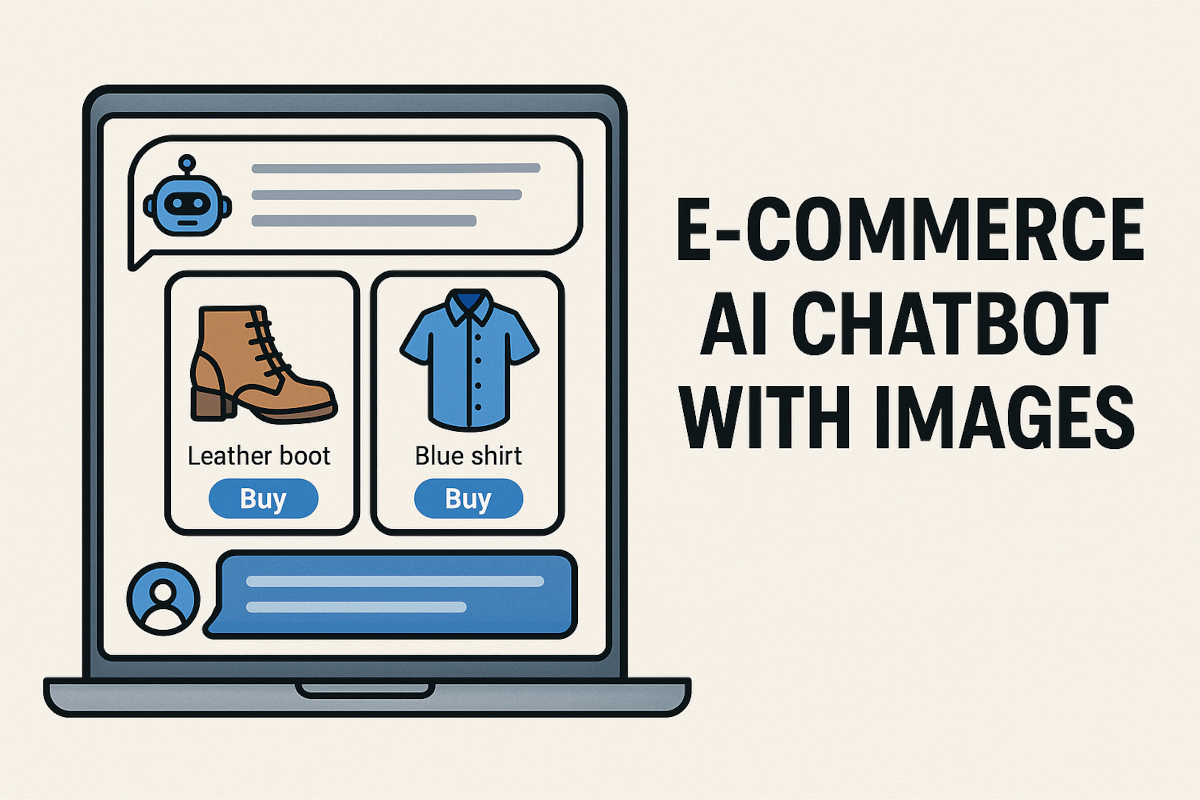
Imagine visiting an online store late at night with a question about a product. Instead of waiting until the next business day for an email response, a chatbot instantly answers your question, recommends the right product, offers a discount code, and guides you through checkout—all within minutes.
This is the power of Conversational Commerce.
As customer expectations continue to evolve, businesses must provide instant, personalized, and seamless shopping experiences. Modern consumers expect quick answers, personalized recommendations, and support across multiple channels such as websites, mobile apps, WhatsApp, Facebook Messenger, and Instagram.
Artificial Intelligence (AI) is making this possible through intelligent chatbots that simulate human conversations while helping customers discover products, make informed purchasing decisions, and complete transactions faster.
In this comprehensive guide, you'll learn what Conversational Commerce is, how AI Chatbots are transforming online shopping, the benefits for businesses, implementation strategies, best practices, common mistakes, and future trends shaping digital commerce.
What Is Conversational Commerce?
Conversational Commerce is the use of messaging platforms, chatbots, voice assistants, and Artificial Intelligence to help customers interact with businesses throughout the buying journey.
Instead of navigating multiple pages, customers simply ask questions in natural language, and AI provides immediate assistance.
Examples include:
- Product recommendations
- Order tracking
- Customer support
- Appointment booking
- Personalized shopping assistance
- Payment guidance
- Post-purchase support
The goal is to make shopping as simple as having a conversation.
What Are AI Chatbots?
An AI Chatbot is software powered by Artificial Intelligence and Natural Language Processing (NLP) that understands customer queries and responds conversationally.
Unlike traditional rule-based chatbots, AI chatbots can:
- Understand context
- Learn from conversations
- Handle complex questions
- Personalize recommendations
- Support multiple languages
- Operate 24/7
This makes them valuable tools for businesses seeking to improve customer engagement and increase conversions.
Why Conversational Commerce Matters
Today's consumers expect speed and convenience.
Research consistently shows that customers are more likely to purchase when they receive immediate answers to their questions.
Businesses implementing Conversational Commerce benefit from:
- Faster customer support
- Higher conversion rates
- Increased customer satisfaction
- Reduced cart abandonment
- Better customer engagement
- Lower support costs
- Personalized shopping experiences
- Improved customer retention
In a competitive digital marketplace, these advantages can significantly impact revenue growth.
Traditional Shopping vs Conversational Commerce
| Traditional Online Shopping | Conversational Commerce |
|---|---|
| Customer searches manually | AI guides customers instantly |
| Limited business hours | Available 24/7 |
| Generic product suggestions | Personalized recommendations |
| Email-based support | Instant messaging support |
| Complex navigation | Simple conversational interface |
| Slower purchasing decisions | Faster decision-making |
How AI Chatbots Transform Shopping
1. Instant Customer Support
One of the biggest frustrations in online shopping is waiting for responses.
AI chatbots answer questions immediately.
Examples include:
- Product availability
- Shipping information
- Return policies
- Pricing details
- Warranty information
Quick responses improve customer confidence.
2. Personalized Product Recommendations
AI analyzes:
- Browsing history
- Purchase history
- Customer preferences
- Shopping behavior
Based on this information, chatbots recommend products tailored to individual customers.
For example:
A customer searching for running shoes may also receive recommendations for fitness trackers and sportswear.
Personalization often increases average order value.
3. Guided Shopping Experience
Instead of browsing hundreds of products, customers simply describe what they need.
Example conversation:
Customer:
"I'm looking for a laptop for graphic design under ₹80,000."
AI Chatbot:
"Here are three excellent options with dedicated graphics cards that match your budget."
This reduces decision fatigue and speeds up purchases.
4. Reducing Cart Abandonment
Many customers leave during checkout due to unanswered questions.
Chatbots can:
- Explain shipping costs
- Apply discount codes
- Suggest payment options
- Resolve technical issues
Small interventions often recover lost sales.
5. Order Tracking and Post-Purchase Support
Customers frequently ask:
- Where is my order?
- When will it arrive?
- How do I return it?
Instead of contacting customer support, AI chatbots provide instant updates, improving customer satisfaction while reducing support workloads.
6. Multichannel Customer Engagement
Conversational Commerce extends beyond websites.
AI chatbots work across:
- Facebook Messenger
- Mobile apps
- Live chat
- Voice assistants
This creates a consistent customer experience across platforms.
Real-World Example
Imagine an online fashion retailer.
Without AI chatbots:
- Customers browse manually.
- Product questions remain unanswered.
- Checkout takes longer.
- Cart abandonment increases.
After implementing Conversational Commerce:
- AI recommends outfits.
- Chatbot answers sizing questions.
- Customers receive instant discounts.
- Checkout becomes faster.
Result:
- Higher conversions
- Increased customer satisfaction
- Better customer retention
- Improved average order value
Key Technologies Behind Conversational Commerce
Several technologies power modern AI chatbots:
Artificial Intelligence (AI)
Enables intelligent conversations and decision-making.
Natural Language Processing (NLP)
Helps chatbots understand human language.
Machine Learning
Improves chatbot responses through continuous learning.
Generative AI
Creates more natural and context-aware conversations.
Customer Data Platforms (CDPs)
Provide personalized recommendations based on customer behavior.
How Businesses Can Implement Conversational Commerce
Step 1: Identify Customer Pain Points
Determine where customers need assistance.
Examples:
- Product selection
- Checkout
- Returns
- Support
Step 2: Select the Right AI Platform
Choose a chatbot solution that supports:
- AI
- NLP
- CRM integration
- Analytics
- Multi-channel deployment
Step 3: Train the Chatbot
Use:
- FAQs
- Product catalogs
- Customer conversations
- Knowledge bases
Better training produces better conversations.
Step 4: Personalize Customer Interactions
Use customer data responsibly to recommend relevant products and services.
Personalization improves engagement significantly.
Step 5: Continuously Monitor Performance
Track metrics such as:
- Customer satisfaction
- Response accuracy
- Conversion rate
- Average order value
- Resolution time
Continuous optimization delivers better long-term results.
Best Practices for Conversational Commerce
Businesses should:
- Use conversational language.
- Keep responses clear and concise.
- Offer human support when necessary.
- Personalize recommendations.
- Respond instantly.
- Update chatbot knowledge regularly.
- Maintain consistent brand voice.
- Optimize for mobile devices.
These practices improve both customer satisfaction and business performance.
Common Mistakes to Avoid
Many businesses fail because they:
- Over-automate conversations.
- Ignore human escalation.
- Use outdated chatbot data.
- Provide robotic responses.
- Fail to personalize interactions.
- Ignore analytics.
- Don't test chatbot performance regularly.
- Make conversations unnecessarily complicated.
Avoiding these mistakes leads to a more effective conversational experience.
The Future of Conversational Commerce
The future looks increasingly intelligent.
Emerging trends include:
- Voice-enabled shopping
- AI shopping assistants
- Hyper-personalization
- Emotion-aware AI
- Visual search integration
- Predictive recommendations
- Omnichannel customer experiences
As AI continues to evolve, conversational shopping will become even more natural and personalized.
How Codexxa Can Help Businesses Implement Conversational Commerce
Building intelligent shopping experiences requires the right technology foundation.
If you're planning to integrate AI-powered chatbots, virtual shopping assistants, or intelligent customer support, AI Development Services can help you design and deploy scalable AI solutions tailored to your business needs.
Additionally, conversational commerce performs best on fast, secure, and user-friendly digital platforms. Whether you're launching an eCommerce website or upgrading an existing online store, Web Development Services can help create responsive, high-performance websites optimized for customer engagement and conversions.
Key Takeaways
- Conversational Commerce transforms shopping through AI-powered conversations.
- AI Chatbots provide instant, personalized customer support.
- Personalized recommendations increase sales and customer satisfaction.
- Chatbots reduce cart abandonment and improve conversions.
- AI-powered shopping is available 24/7 across multiple channels.
- Businesses should continuously train and optimize chatbots.
- Human support remains essential for complex customer issues.
- Conversational Commerce is becoming a critical part of modern digital transformation strategies.
Conclusion
Customer expectations have shifted from simply buying products online to enjoying personalized, seamless, and instant shopping experiences. Conversational Commerce, powered by AI Chatbots, bridges the gap between customer needs and business goals by making interactions faster, smarter, and more engaging.
Organizations that invest in AI-driven shopping experiences are better positioned to increase customer satisfaction, improve operational efficiency, reduce support costs, and drive higher conversions. As technologies like Natural Language Processing, Generative AI, and predictive analytics continue to advance, conversational commerce will play an even bigger role in the future of eCommerce.
Businesses that adopt these innovations today will be well-equipped to meet tomorrow's customer expectations and maintain a competitive edge.
Call to Action
Ready to transform your online shopping experience with AI?
Implement Conversational Commerce solutions that provide instant support, personalized recommendations, and seamless customer interactions. By combining intelligent AI chatbots with a high-performance digital platform, your business can increase engagement, boost conversions, and deliver exceptional shopping experiences that keep customers coming back.
Frequently Asked Questions (FAQs)
1. What is Conversational Commerce?
Conversational Commerce uses AI chatbots, messaging platforms, and voice assistants to help customers shop, ask questions, and complete purchases through natural conversations.
2. How do AI chatbots improve online shopping?
AI chatbots provide instant support, recommend products, answer customer questions, track orders, and guide shoppers through the buying process.
3. What industries benefit from Conversational Commerce?
Retail, eCommerce, healthcare, banking, travel, education, real estate, and many service-based businesses benefit from AI-powered conversational experiences.
4. Can AI chatbots replace human customer support?
No. AI chatbots handle routine queries efficiently, while human agents remain essential for resolving complex or sensitive customer issues.
5. How does Conversational Commerce increase sales?
By providing personalized recommendations, reducing response times, minimizing cart abandonment, and improving customer confidence during purchasing decisions.
6. Is Conversational Commerce suitable for small businesses?
Yes. Small businesses can use AI chatbots to provide 24/7 customer support, automate repetitive tasks, and enhance customer engagement without significantly increasing operational costs.
7. What technologies power Conversational Commerce?
Key technologies include Artificial Intelligence (AI), Natural Language Processing (NLP), Machine Learning, Generative AI, Customer Relationship Management (CRM), and Customer Data Platforms (CDPs).
8. How can businesses measure the success of Conversational Commerce?
Businesses can monitor chatbot response accuracy, customer satisfaction scores, conversion rates, average order value, cart abandonment rates, and customer retention metrics.